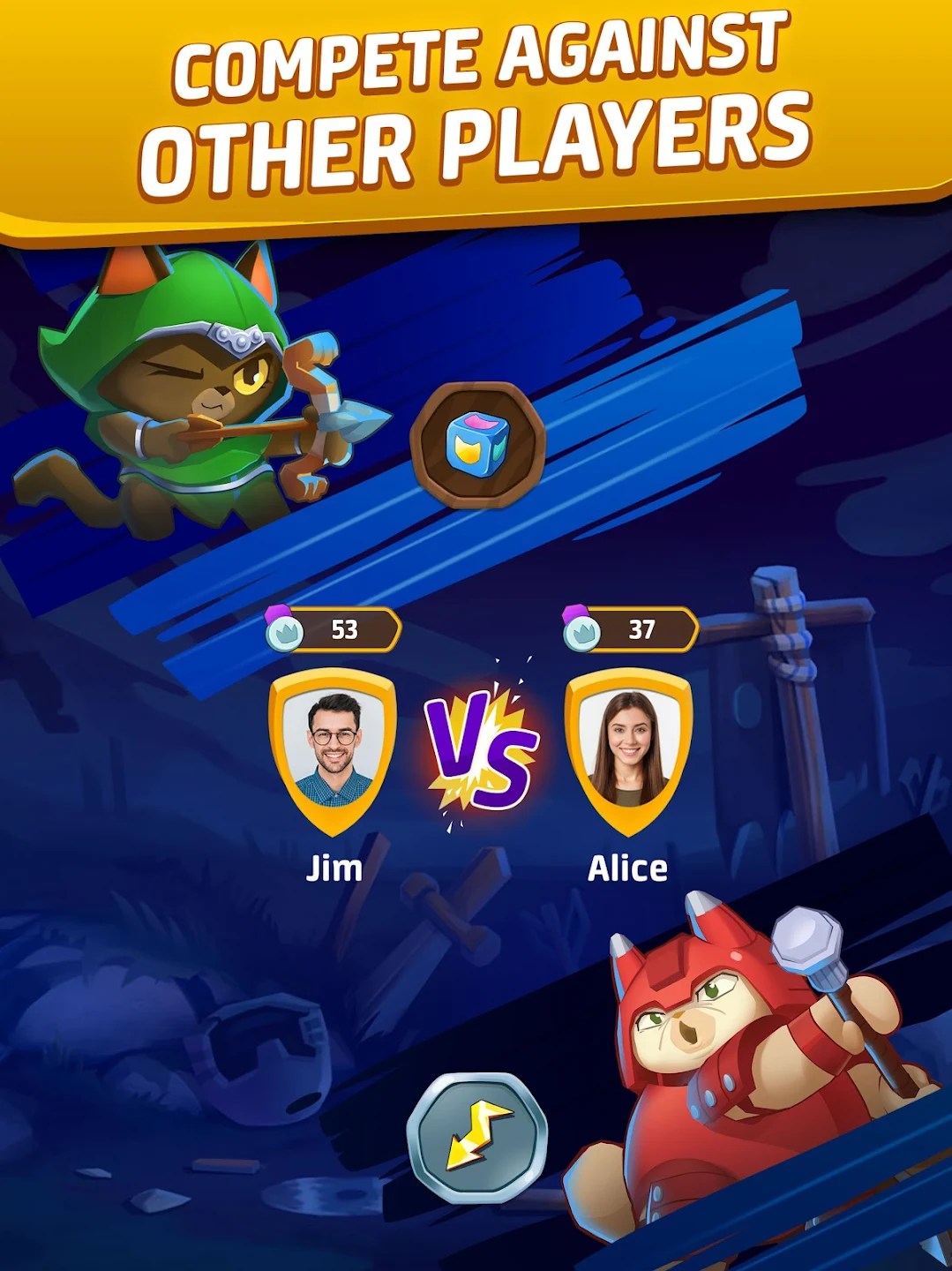
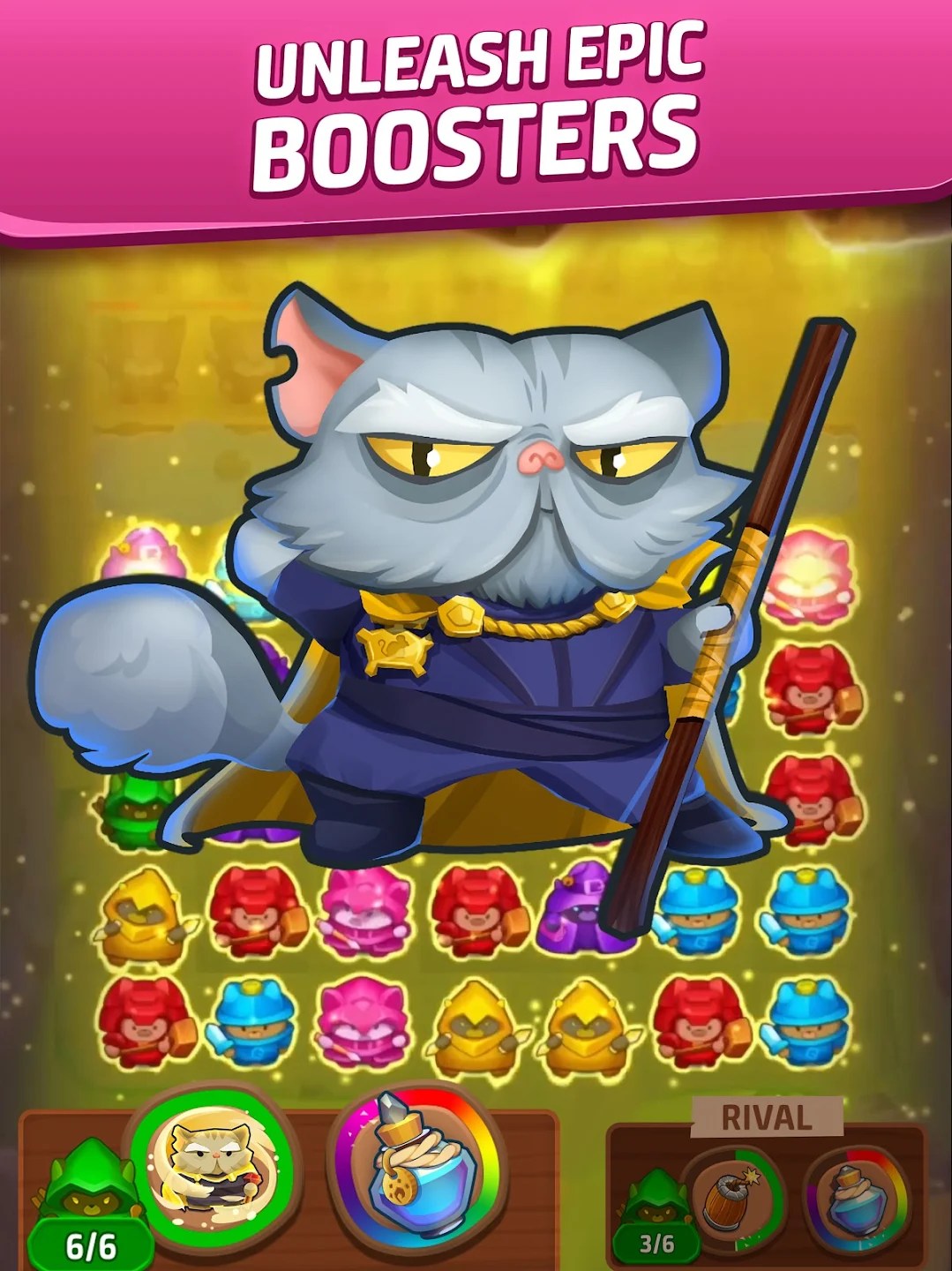
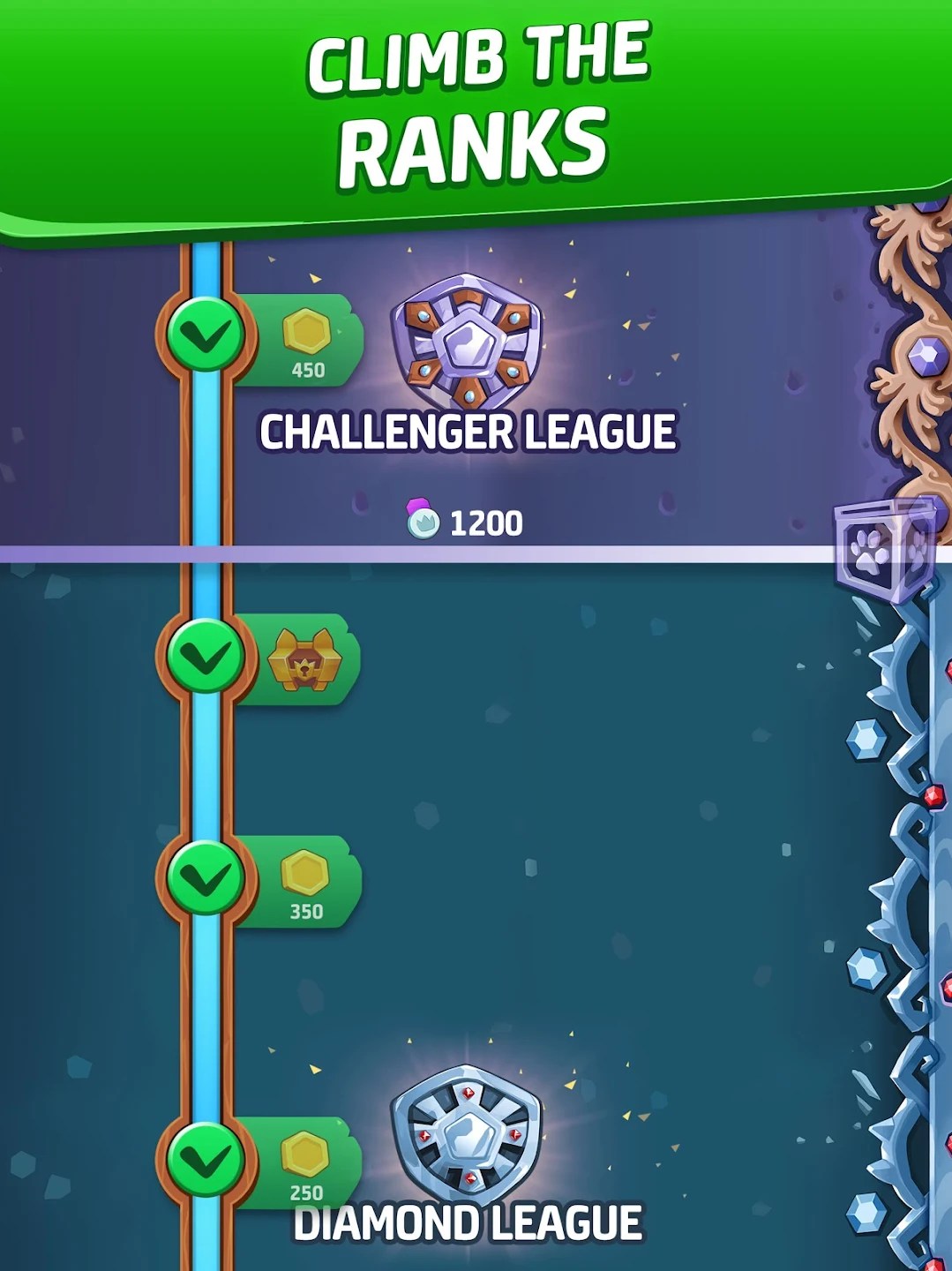
Cat Force was the project I spent my time on at Playtika Montreal. The game was live since before I began working at the studio, so the work that I did was mainly for content updates and new features to be presented to the active users. Cat Force is a competitive PVP Match-3 game where you can go head-to-head against other players in real-time, collect daily rewards, and earn medals to climb the leaderboards. Players equip game-changing boosters and charge them up during the match to score huge streaks and turn the odds in their favor. It features events, leaderboard seasons, power-ups, live contests, and missions. I was one of the Unity developers on the project, and was directly responsible for a brand new AI move-selection algorithm, the entire live contest feature, a particle pooling system and improved VFX in various parts of the game, and significant refactoring of old code for various features, including the hint system, the tutorial, and the main loading flow. I also had a big hand in assisting other members of our team and other teams with Unity, as it was still fairly new for many of my team members. I wrote up documentation for features, helped people with best practices, played a large part in reviewing code, and guided newer developers in how to best do certain things using the engine. It was interesting to once again be able to work on a live game, and see the direct effects of my work immediately after release. I worked on a team with only two developers, so it was an interesting challenge to be responsible for such a large part of the various features I worked on.
Things learned from Cat Force:
It was interesting to be able to work alongside developers that weren’t as familiar with Unity. There were a lot of good opportunities for me to share my expertise and show best practices to my fellow team members.
Cat Force was in production by a different studio before it was acquired by Playtika, so the history of the project was easy to see in various parts of the game. It was a great challenge to go through and refactor old parts of the code base in order to have them work better with the new requirements.
Working on an established game as part of a large company meant a lot of design meetings and management approvals. It can sometimes be tough to get approvals for even tiny changes!

 Alexi Bay